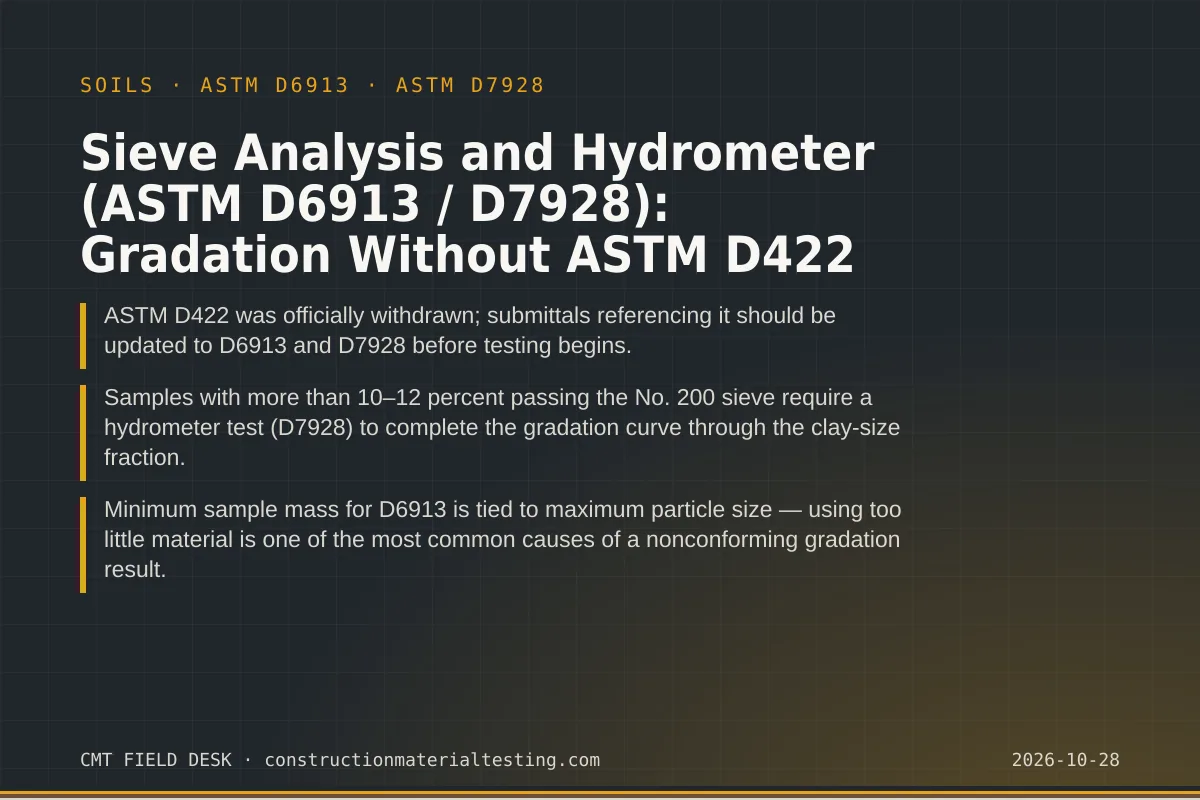
October 28, 2026 · 8 min read
A field-to-lab walkthrough of composite gradation testing under the two ASTM standards that replaced D422, covering sieve analysis, hydrometer procedures, and how results govern select fill acceptance.
Read the guide
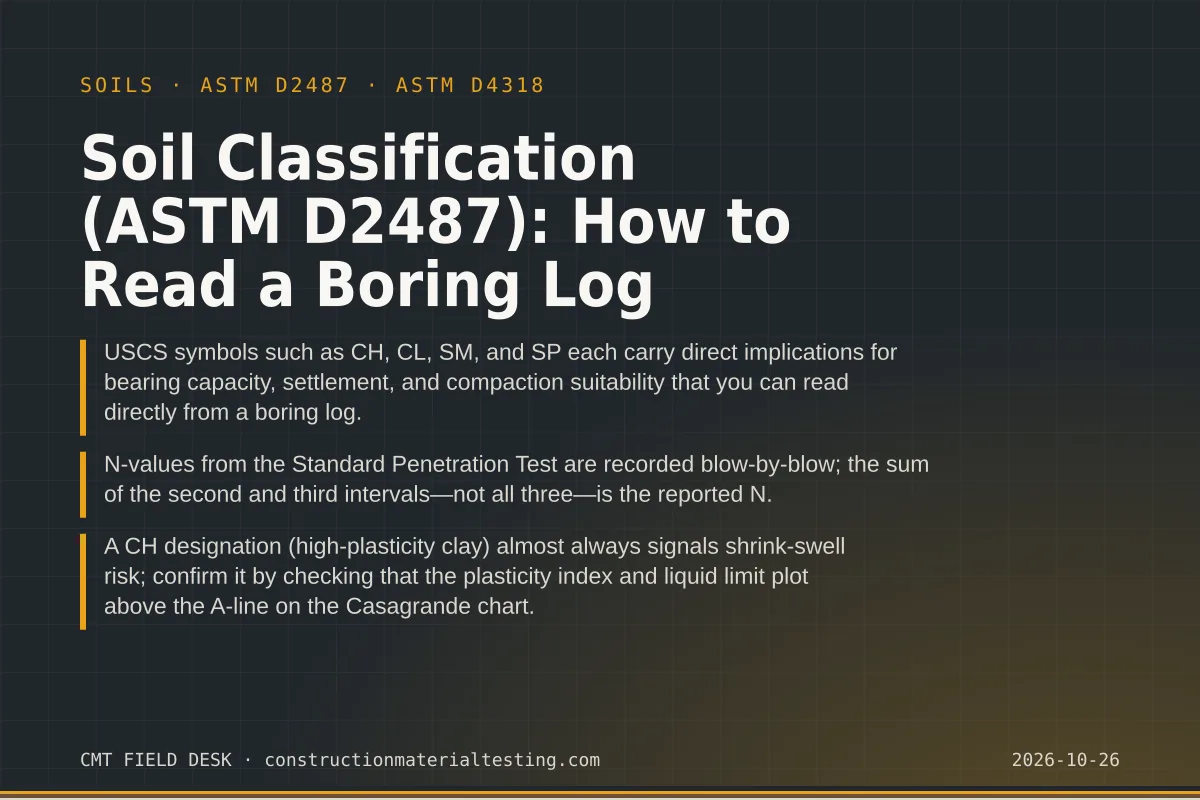
October 26, 2026 · 8 min read
A boring log tells a complete story about what lies beneath a site; this guide walks you through reading every column, symbol, and number with the same eye a geotechnical technician uses in the field.
Read the guide
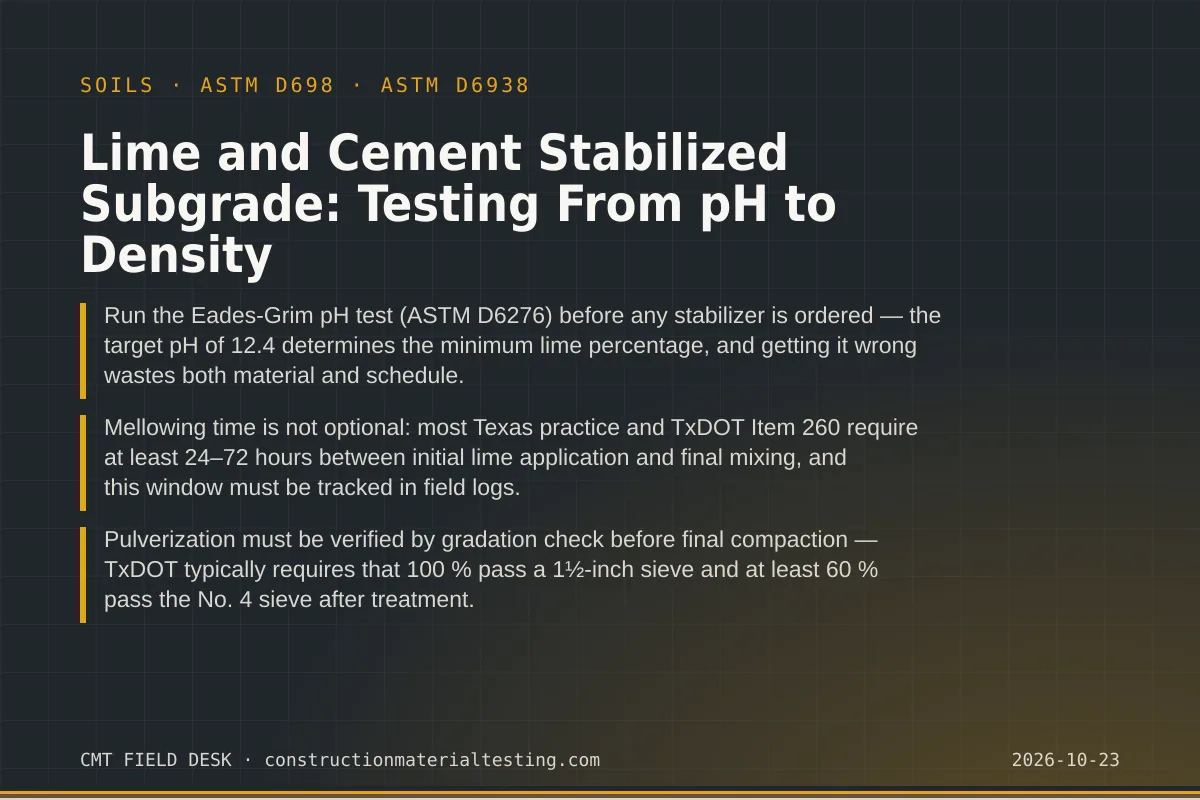
October 23, 2026 · 15 min read
From determining the right lime percentage with the Eades-Grim pH test to verifying compaction and unconfined compressive strength in the field, this guide walks through every testing stage for lime and cement stabilized subgrade.
Read the guide
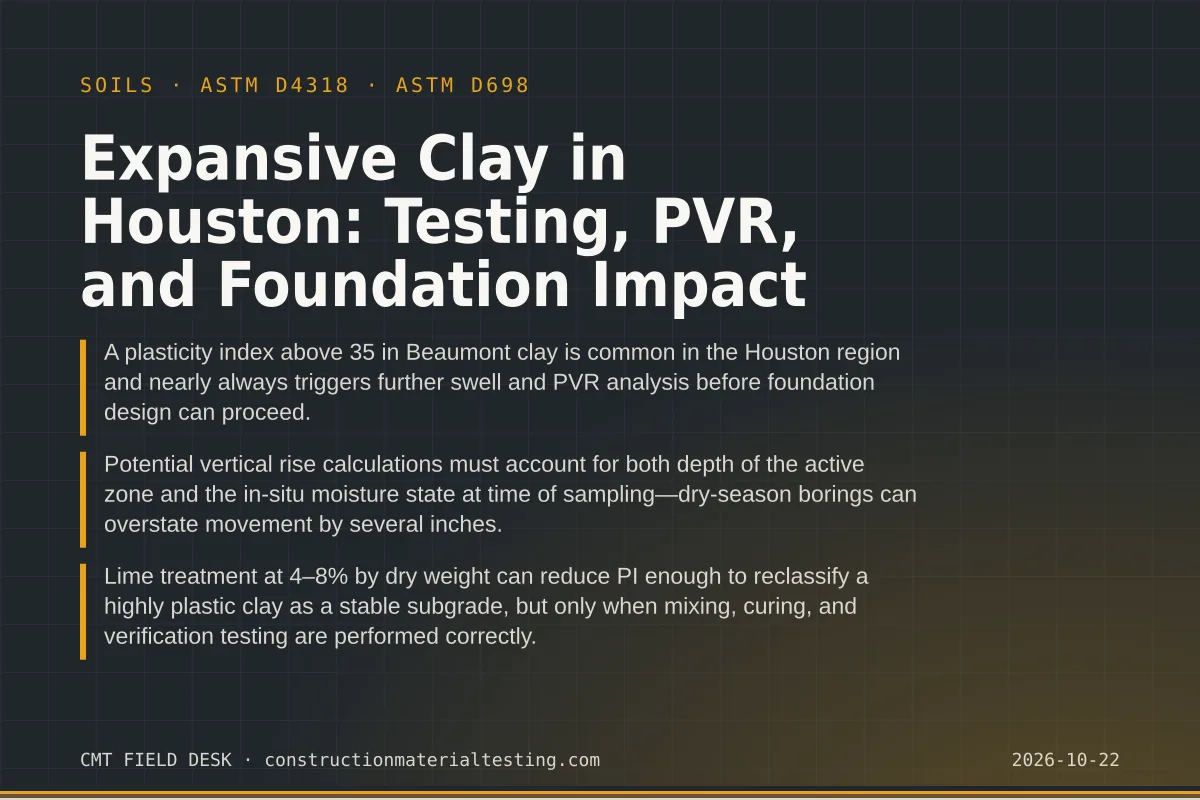
October 22, 2026 · 15 min read
A field-desk guide to identifying, testing, and mitigating Beaumont Formation expansive clays across the Houston region—covering plasticity index, potential vertical rise, lime stabilization, and post-tensioned slab design inputs.
Read the guide
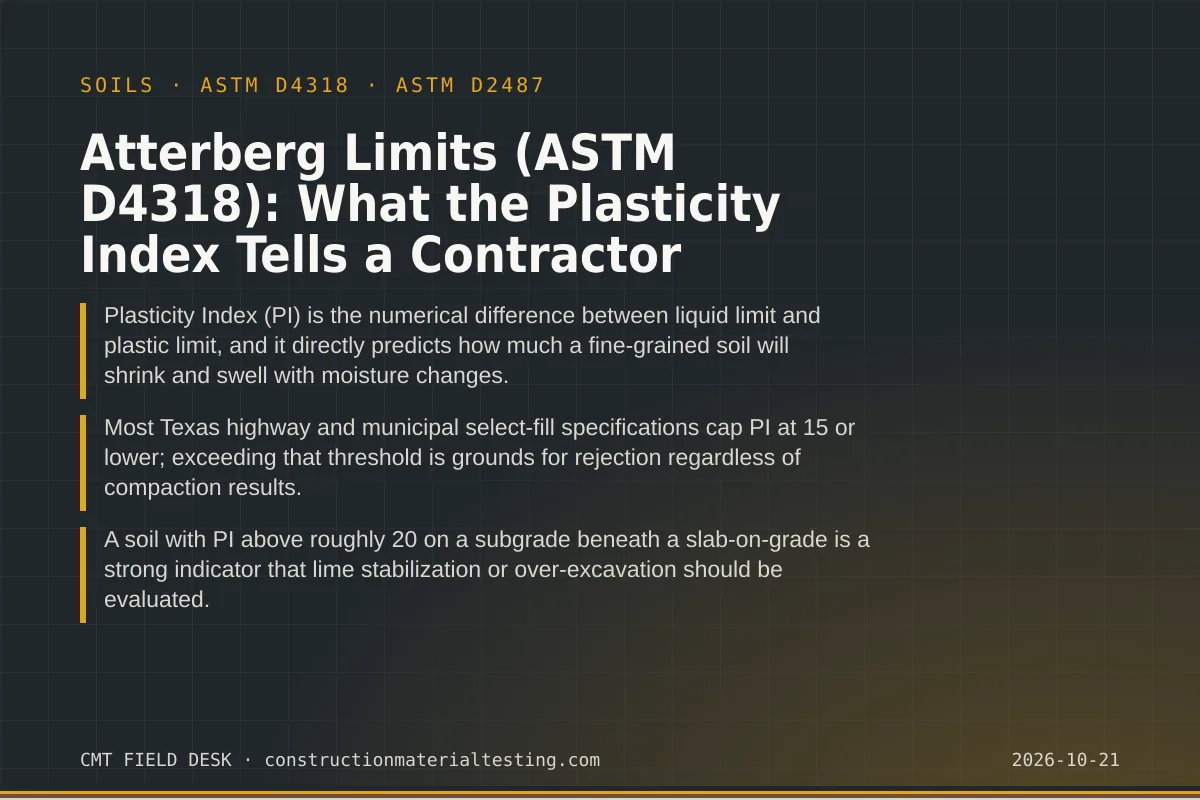
October 21, 2026 · 8 min read
Understanding what your soil's plasticity index actually means—before grading begins—can save a project from heave, rejection of fill, or a failed lime-stabilization spec.
Read the guide
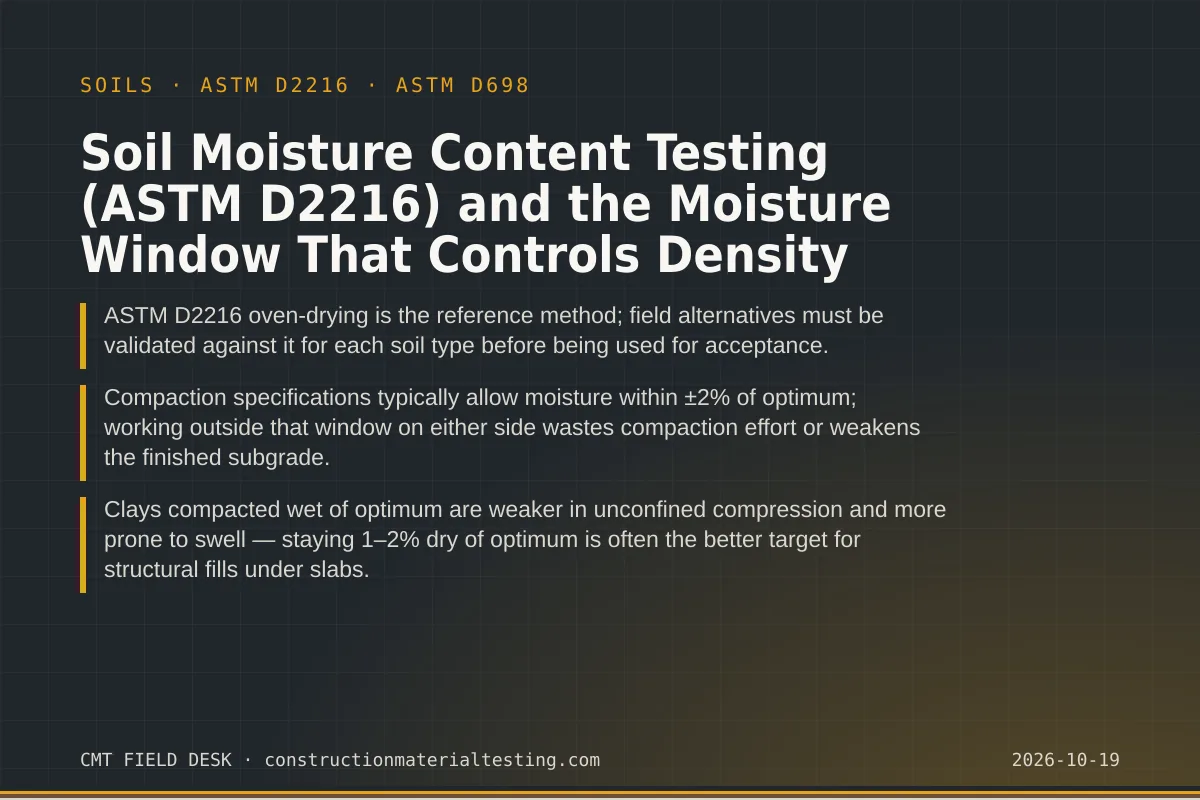
October 19, 2026 · 8 min read
Field moisture governs whether compaction effort produces density or just wasted passes — here is how we measure it, interpret it, and use it to keep earthwork on track.
Read the guide
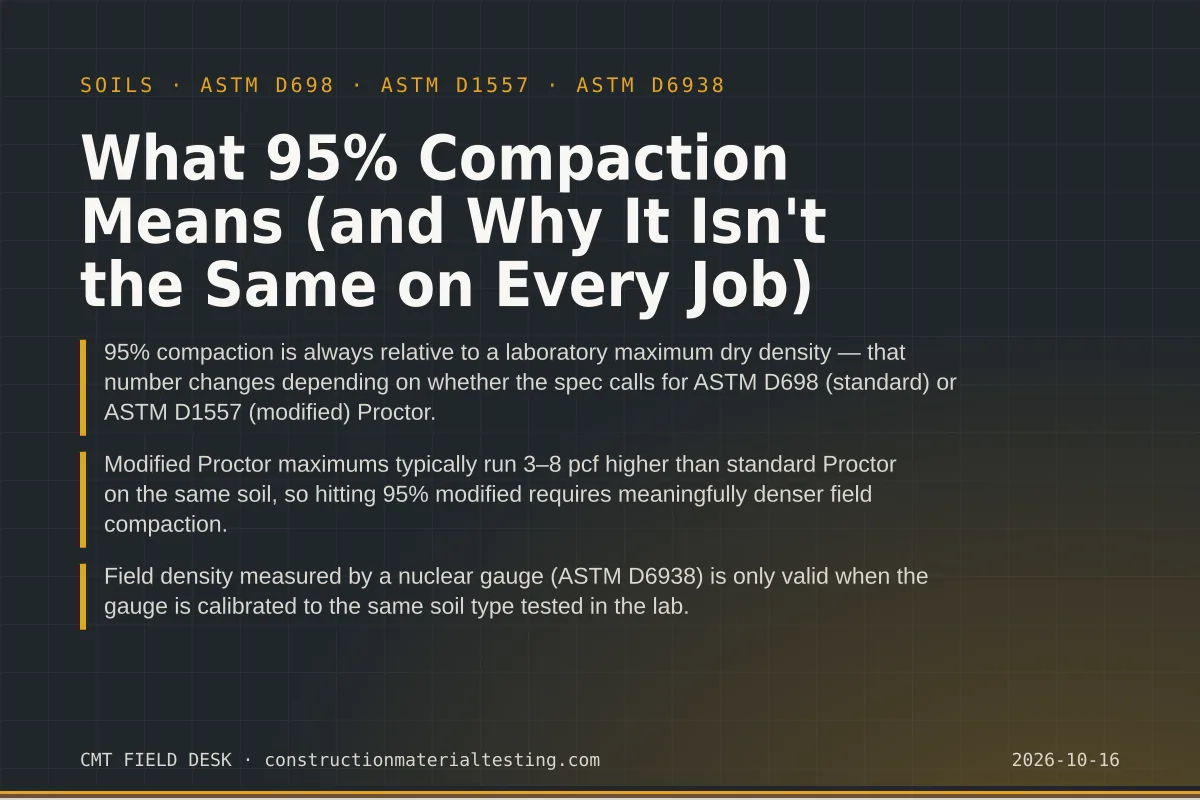
October 16, 2026 · 4 min read
Ninety-five percent compaction is a specification floor, not a fixed target — the reference density, moisture window, and lift thickness all determine whether your soil actually gets there.
Read the guide
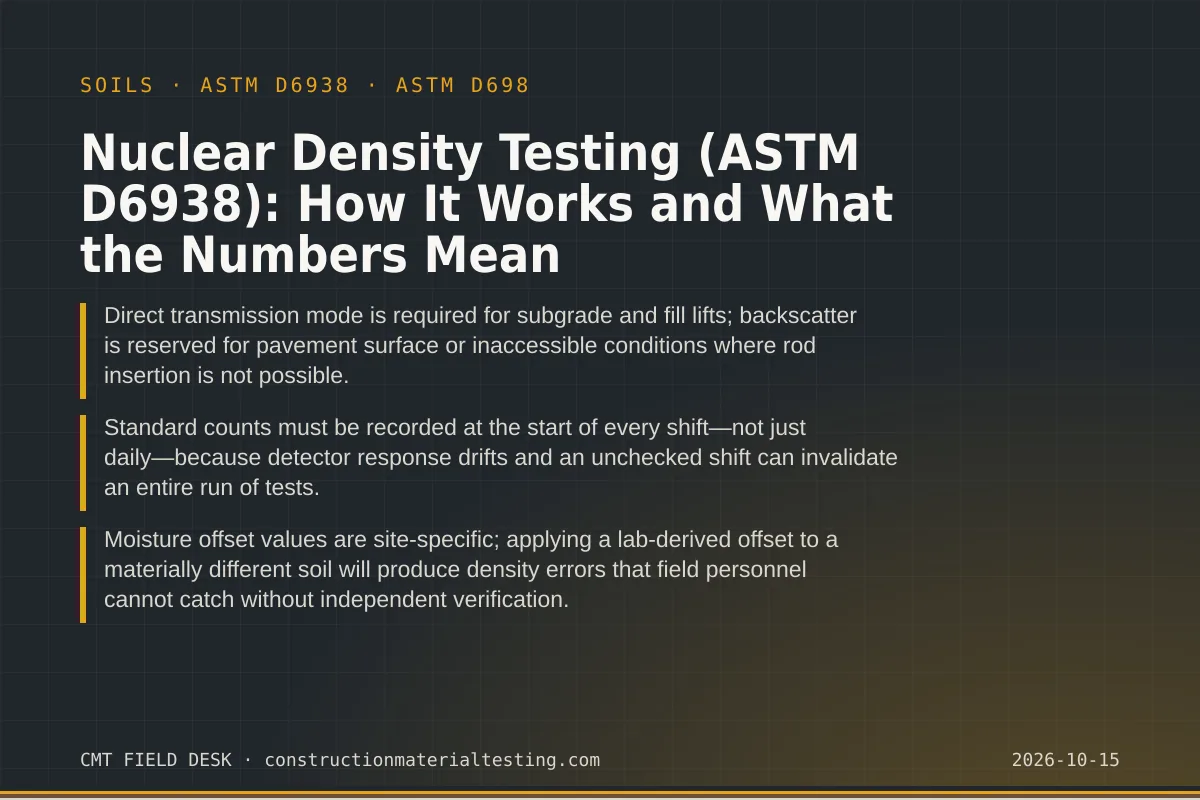
October 15, 2026 · 9 min read
A field-by-field explanation of nuclear density testing: what the gauge is measuring, how geometry changes the result, and what a passing compaction number actually requires.
Read the guide
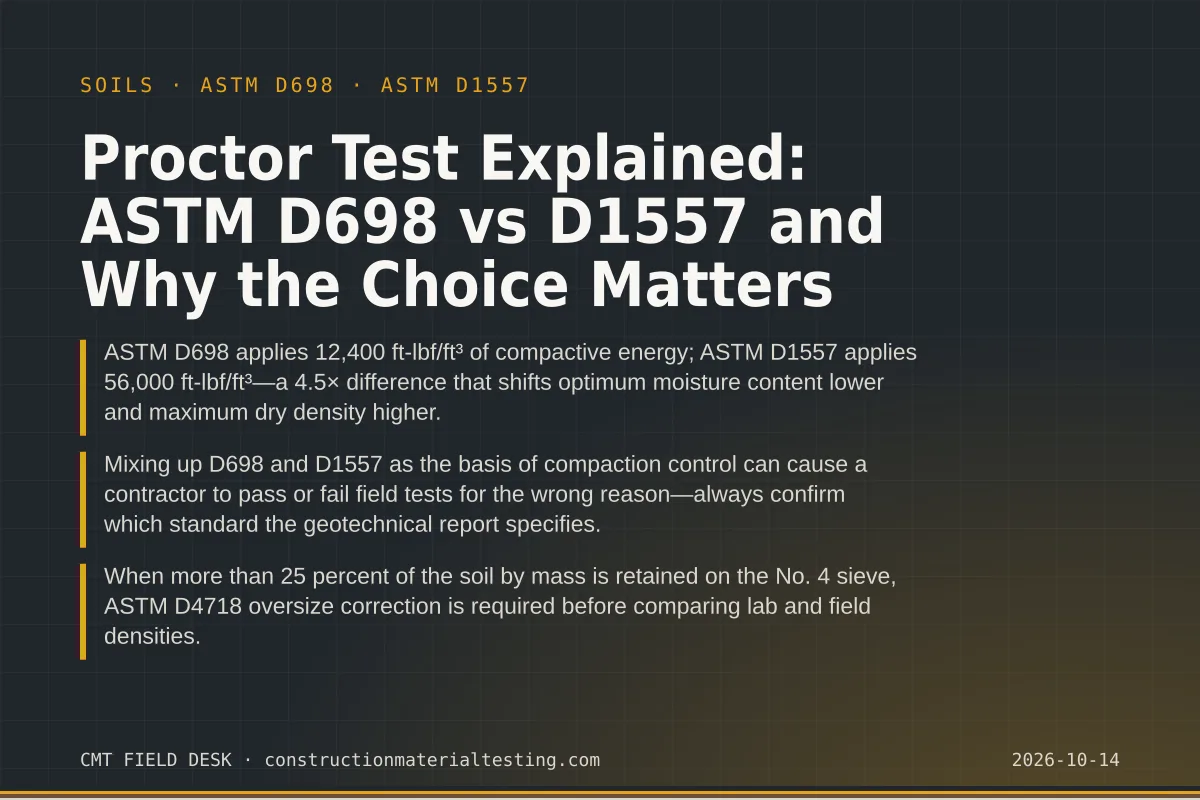
October 14, 2026 · 14 min read
A field-desk breakdown of the standard and modified Proctor tests—covering compactive energy, curve interpretation, oversize correction, and how to match the right standard to your project specification.
Read the guide
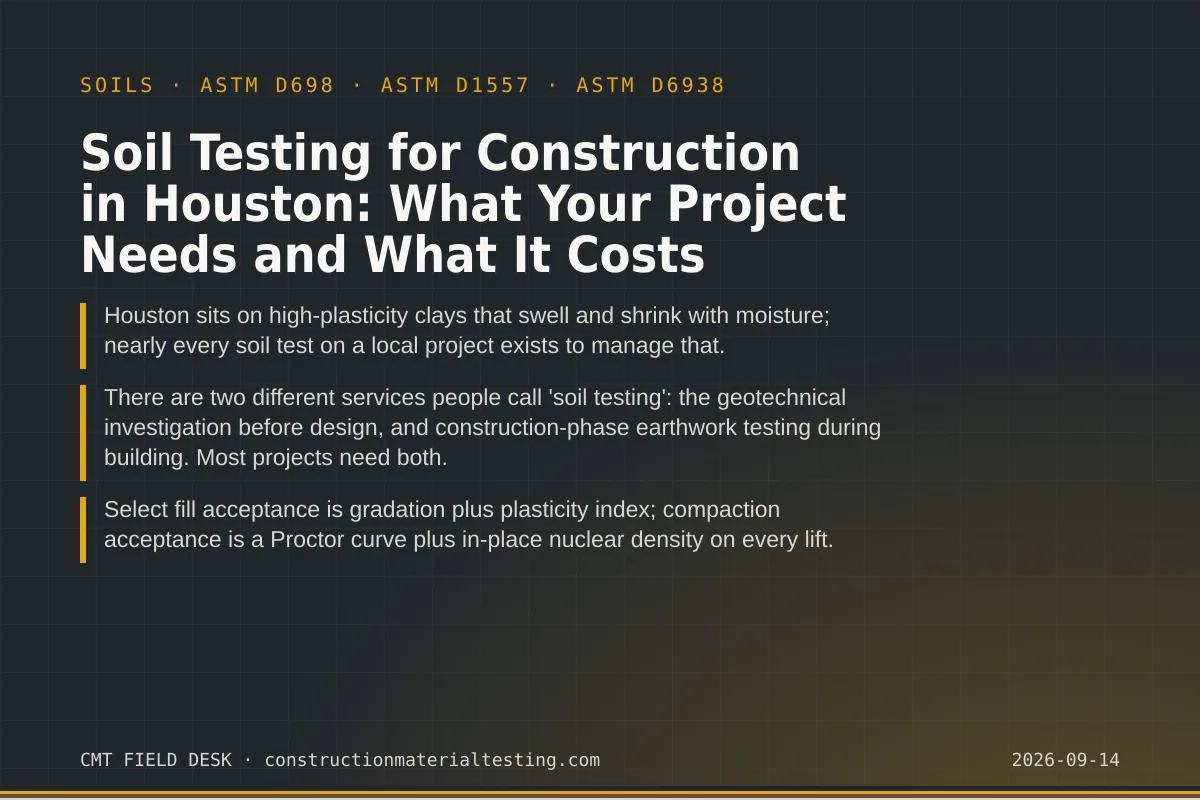
September 14, 2026 · 10 min read
Which soil tests a Houston-area project actually needs — geotechnical borings, Proctor and density, Atterberg limits, select fill verification — why Gulf Coast clay drives all of it, and how the testing is scheduled and priced.
Read the guide
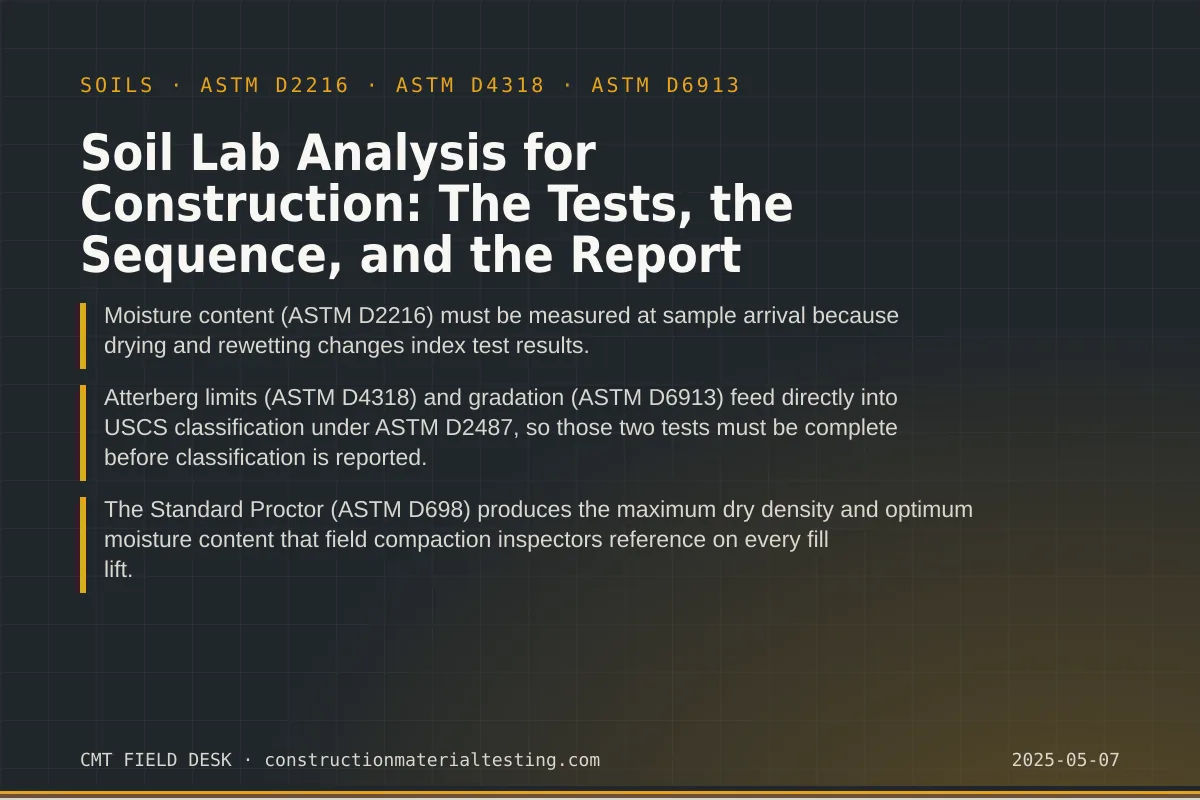
May 7, 2025 · 7 min read
A practitioner's walkthrough of every test in a standard soil lab analysis battery, how samples move through the laboratory, and how the final report drives decisions on fill, subgrade, and foundation design.
Read the guide
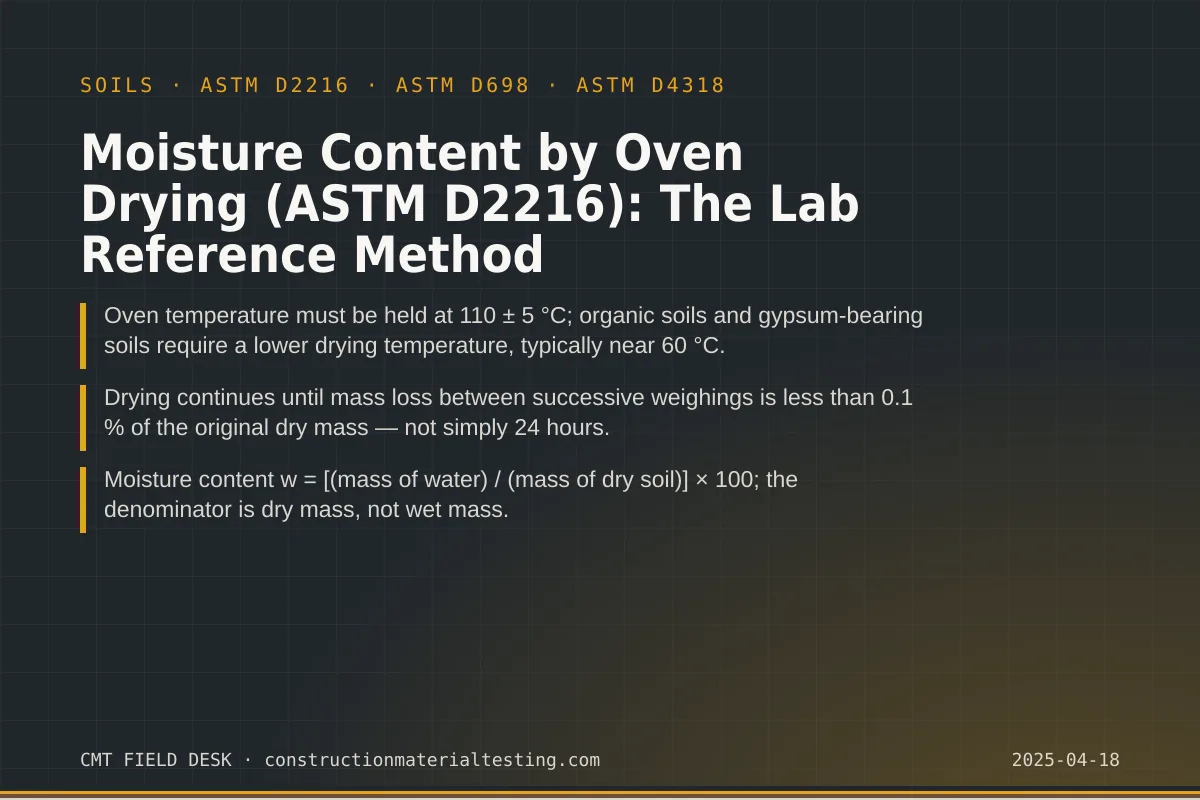
April 18, 2025 · 4 min read
ASTM D2216 is the laboratory reference for moisture content because it measures water mass directly — every indirect method in geotechnical work is calibrated against it.
Read the guide
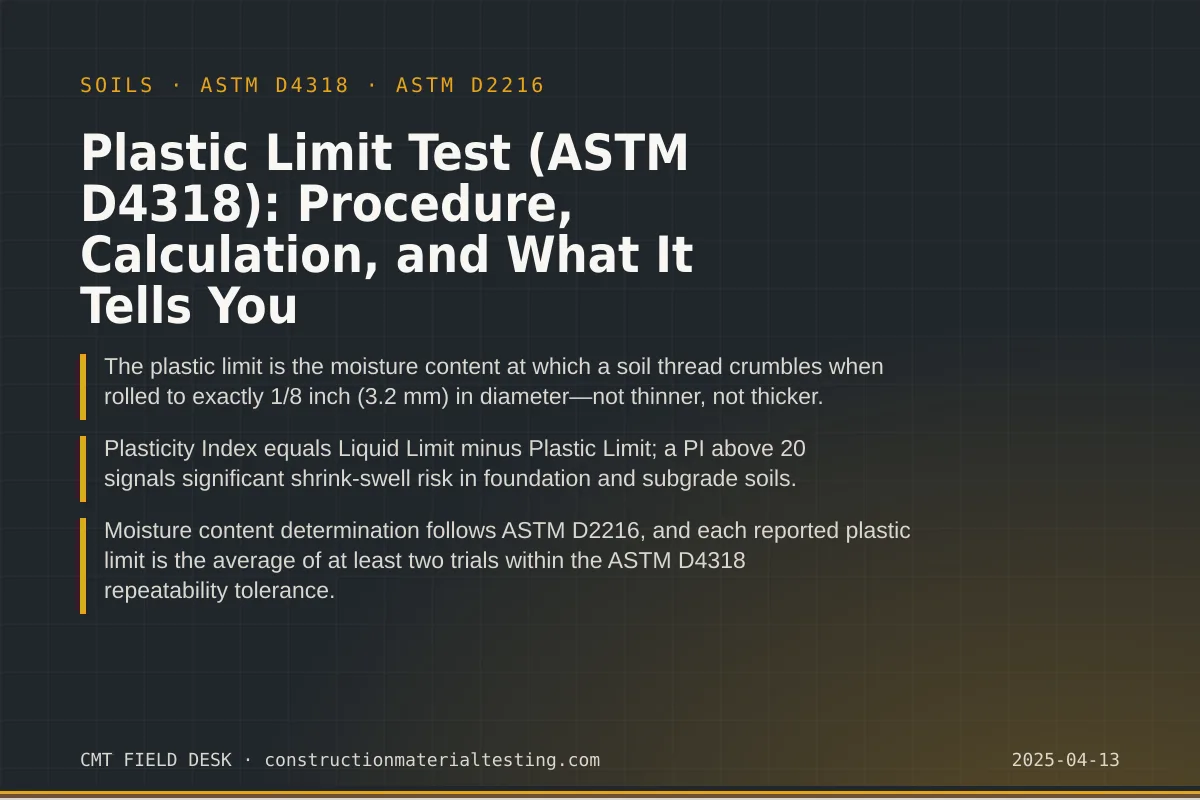
April 13, 2025 · 4 min read
A field-desk breakdown of the plastic limit test: how we run it, how we calculate the result, and why geotechnical engineers and contractors need the number.
Read the guide
April 13, 2025 · 7 min read
Wet washing over the No. 200 sieve captures fines that cling to coarser particles and would survive dry sieving—here is how to run the test correctly from sample prep through final reporting.
Read the guide
April 13, 2025 · 7 min read
A field-desk walkthrough of ASTM D1140 washing procedure, from sample preparation through calculation, explaining why percent passing the No. 200 sieve controls compaction and fill acceptance decisions.
Read the guide
April 13, 2025 · 7 min read
A practical walkthrough of ASTM D4944 calcium carbide testing—how to run it correctly in the field, how to interpret the gauge, and when oven-dry verification is mandatory.
Read the guide
March 6, 2025 · 7 min read
A field-desk walkthrough of ASTM D4318 testing — Casagrande cup, thread rolling, PI calculation, and what the plasticity chart tells you about Houston-area expansive clays.
Read the guide