
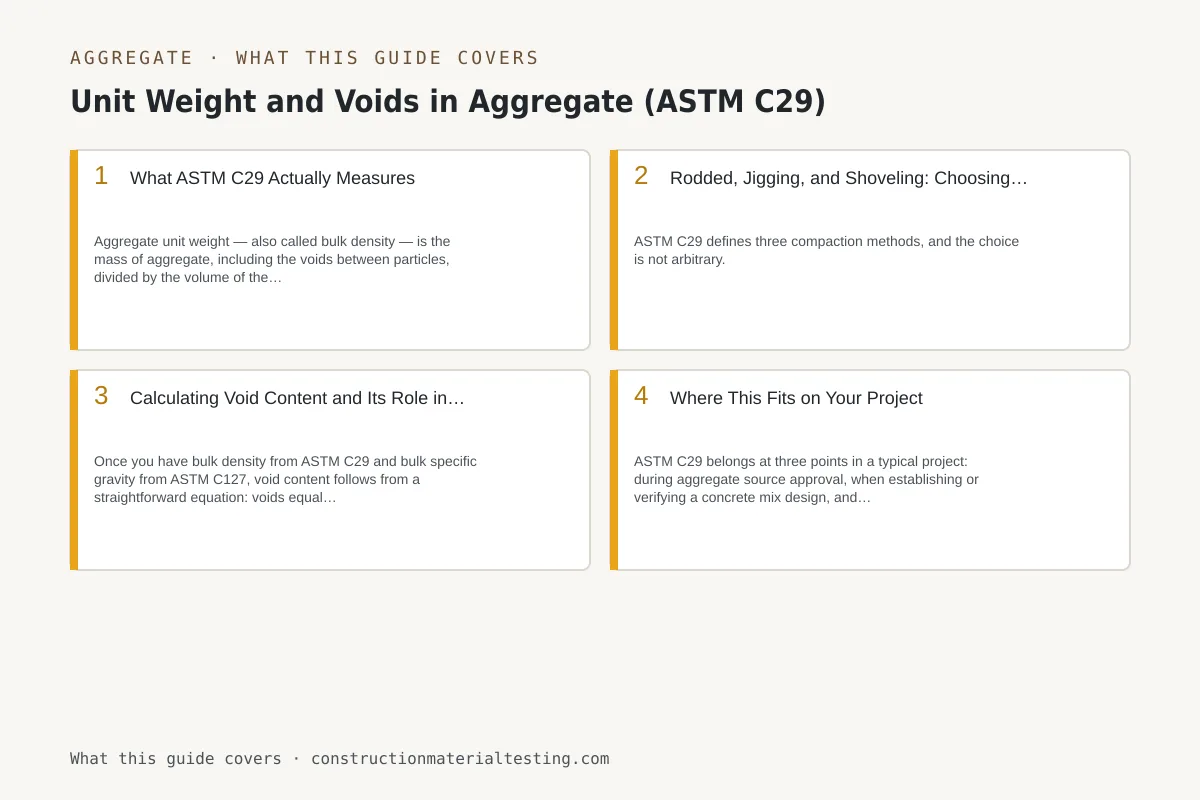
What ASTM C29 Actually Measures
Aggregate unit weight — also called bulk density — is the mass of aggregate, including the voids between particles, divided by the volume of the container that holds it. ASTM C29 gives you two things at once: the bulk density of the aggregate in a defined compaction state, and the percentage of void space between those particles when you combine the result with the specific gravity of the aggregate from ASTM C127 testing. Neither number alone tells the whole story; together they let a mix designer know how much paste volume is needed to fill the gaps and bind the aggregate into concrete.
The test is deceptively simple in appearance — fill a calibrated metal measure, strike it off, weigh it — but the procedural details control the result. Container size is not optional; ASTM C29 specifies minimum container volumes keyed to nominal maximum aggregate size, and using an undersized container forces aggregate into a geometry that overstates density. We calibrate containers regularly against known volumes precisely because a worn or dented measure introduces systematic error into every test run from it.
Rodded, Jigging, and Shoveling: Choosing the Right Procedure
ASTM C29 defines three compaction methods, and the choice is not arbitrary. Rodding applies to aggregate with a nominal maximum size of 1½ inches or smaller. The measure is filled in three equal layers, and each layer receives 25 strokes of a standard tamping rod distributed uniformly over the surface. The rod must penetrate into but not through the previous layer — a detail that matters because over-penetration fractures fines and shifts gradation at the contact zone, inflating apparent density.
Jigging — also called the vibration procedure — is the method for aggregates larger than 1½ inches nominal maximum size, where a rod cannot compact the material without bridging. The filled measure is lifted and dropped onto a firm surface a specified number of times, allowing the larger particles to settle under their own inertia rather than under point loads from a rod. Shoveling is the reference procedure for determining loose unit weight regardless of size: aggregate is shoveled or poured into the measure from a height of approximately two inches above the top, without any deliberate compaction, then struck off. Loose unit weight is used less often in mix design but is valuable for stockpile volume estimates and material ordering.
In practice, we see the most variability in rodded tests when technicians rush the layer-by-layer filling sequence or use a rod that has been bent from job-site handling. A rod even slightly out of round delivers inconsistent compaction energy per stroke. Field technicians should inspect the rod before each test session, not just before each test.
Calculating Void Content and Its Role in Aggregate Unit Weight–Based Mix Design
Once you have bulk density from ASTM C29 and bulk specific gravity from ASTM C127, void content follows from a straightforward equation: voids equal one minus the ratio of bulk density to the product of specific gravity and the density of water, expressed as a percentage. A well-graded coarse aggregate typically shows void content in the low-to-mid thirties by percentage; a gap-graded or uniformly sized aggregate can run considerably higher. That difference translates directly into how much cement paste the mix must carry, which affects both economy and durability.
ACI 211.1 uses the oven-dry rodded unit weight of coarse aggregate to determine the volume of coarse aggregate recommended per unit volume of concrete, with the selection based on the fineness modulus of the fine aggregate. Getting the unit weight wrong by even a few percent shifts the coarse aggregate volume estimate enough to change the water demand and, consequently, the water-to-cementite materials ratio of the finished mix. For mass concrete or heavily reinforced sections where aggregate economy matters, the difference between a measured value and an assumed one can affect both yield and strength results on the first batch.
Void content is also relevant in evaluating whether an aggregate is suitable for a particular application before mix design begins. Aggregates with unusually high void content — often the result of poor gradation or excessive flat and elongated particles — demand more paste for the same workability, raising cost and potentially compromising long-term performance. Running [ASTM C29](test-methods/astm-c29) early in a project, before aggregate approval, catches those issues before they propagate into the mix design.
Where This Fits on Your Project
ASTM C29 belongs at three points in a typical project: during aggregate source approval, when establishing or verifying a concrete mix design, and when aggregate is resampled after a source or gradation change. A change in aggregate supplier or in the crushing and processing operation at the same quarry can shift unit weight by enough to invalidate a previously approved mix design — not because the aggregate is worse, but because the packing geometry changed. Treat C29 as an ongoing verification tool, not a one-time approval test.
Our construction materials testing services cover the full range of aggregate characterization, including ASTM C29 unit weight and void content, with dispatch from our Sugar Land laboratory and 27 regional hubs. If you are preparing a testing plan for an upcoming concrete program or need aggregate source approval testing, request a proposal and we can scope the sampling and testing sequence appropriate for your specification requirements.
Get our guides in your Google results
Add Construction Materials Testing as a preferred source and Google shows our guides more often when you search for testing topics.